


How To Find Relief From Sciatica
Frank’s pain was the worst he’d ever felt. It started in his lower back but then radiated down the back of his leg all the way to his toes. Sometimes, he felt numbness or tingling in his leg, which he found especially concerning. But worst of all, this radiating pain made it almost impossible for him to get around.
Eventually, Frank visited his physical therapist, where he learned this pain had a specific term: sciatica. Its name comes from the fact that it affects the sciatic nerve, which runs from the lower back down into the foot.
Frank also learned that his sciatica, like most people’s, came courtesy of a herniated disc in his lumbar spine. Fortunately, physical therapy is a frontline treatment for herniated discs, and with a month of regular PT sessions, Frank resolved his pain.
Are you experiencing radiating leg pain like Frank? If so, reach out to us at GTS Physical Therapy. We can help you know for certain if your pain is sciatica or another similar condition — and we can help you find relief with a customized treatment plan.
What’s Happening Around Our Clinic!



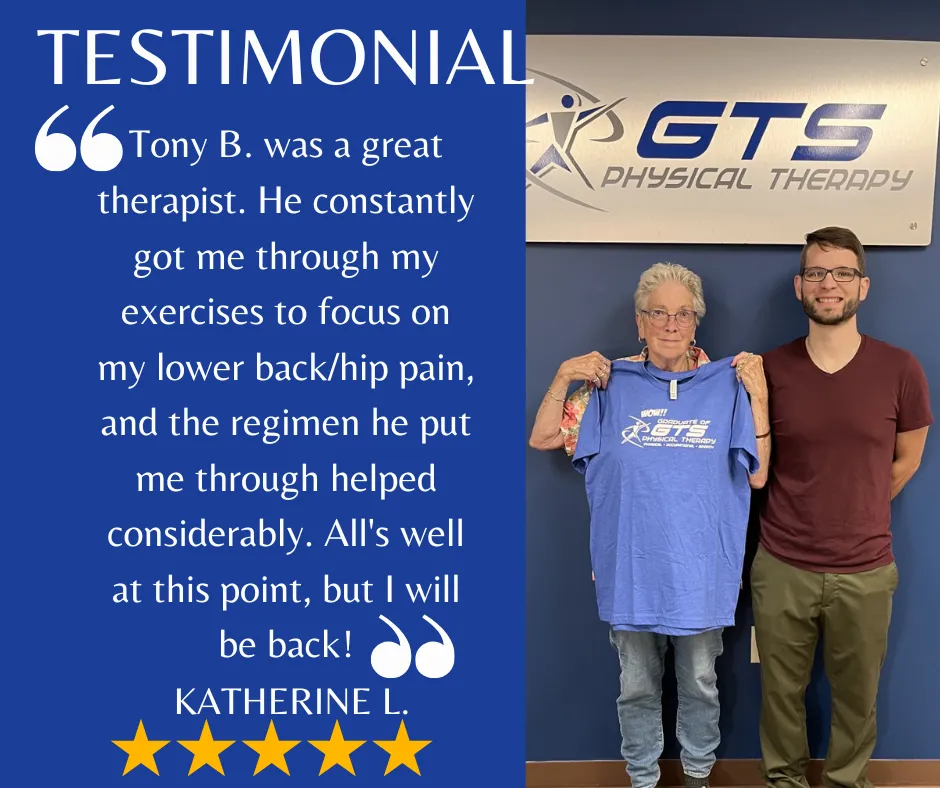
Don’t Let Your 2024 Insurance Benefits Go To Waste!
Take charge of your health today and make the most of your insurance benefits!
If you’ve already met your deductible this year or have funds left in your HSA account, you can take advantage of our remarkable opportunity at GTS Physical Therapy. Don’t let these valuable benefits go unused!

Staff Spotlight
Dr. Lori Mize, PT, DPT, Director of Pelvic Health
Definition of Pelvic Health – Everything about bowel, bladder, reproductive, and sexual function

Dr. Lori Mize, PT, DPT, is a Board-Certified Specialist in Women’s Health Physical Therapy and the new Director of Pelvic Health Services at GTS. With a Doctorate in Physical Therapy from the University of Central Arkansas, Dr. Mize brings over 20 years of experience in clinical practice and teaching. She has presented and taught pelvic health at both national and international levels. Dr. Mize is passionate about education, advocacy, and wellness. She enjoys life on her family’s farm in Southside, Arkansas, where she lives with her husband and high-school sweetheart, Joseph. She loves to spend time with her 4 children and 4 grandchildren, gardening, exploring the outdoors, and traveling.
What Is Sciatica? Symptoms and Causes
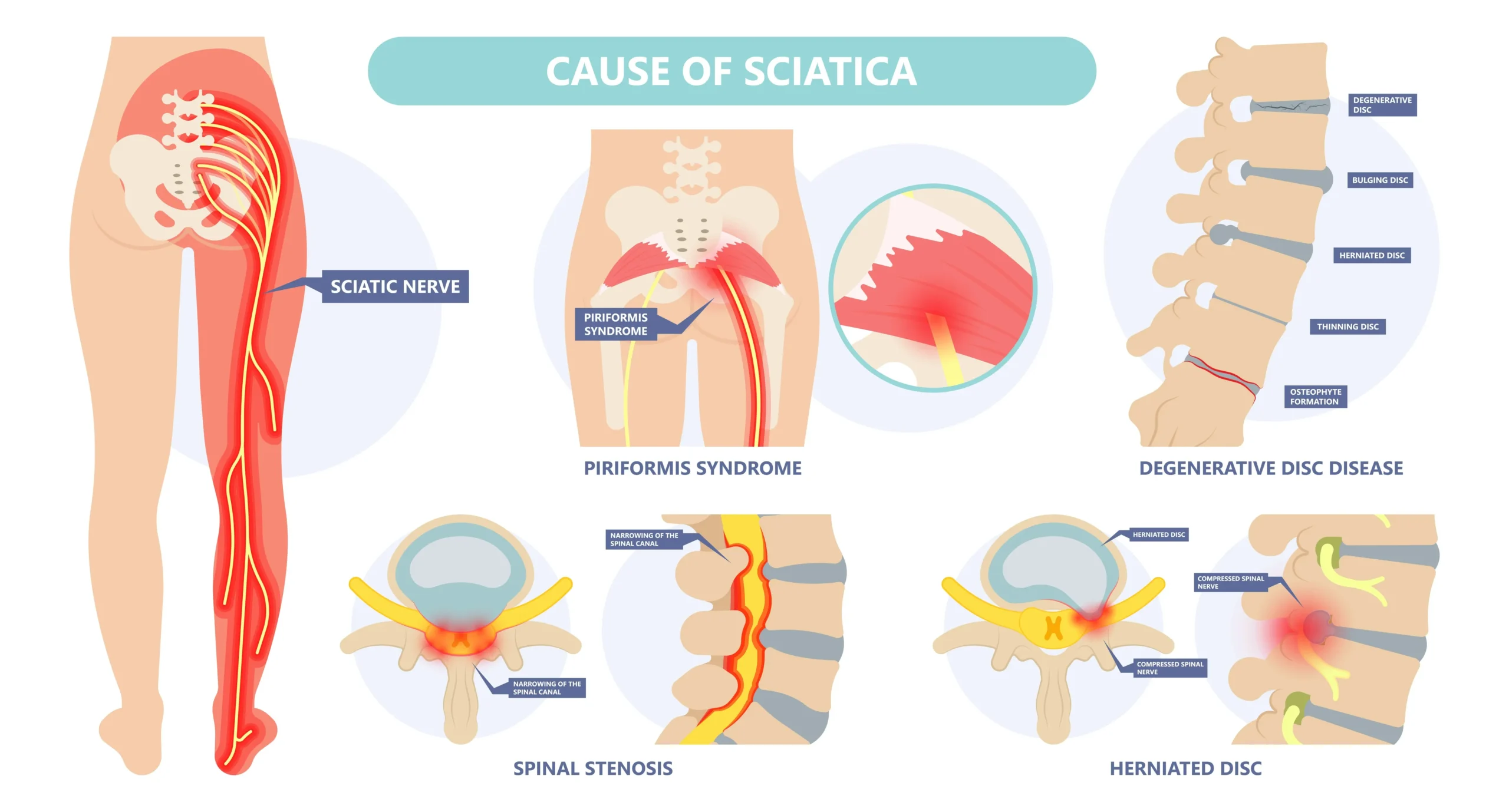
Sciatica is a somewhat misunderstood condition. Many people refer to any radiating pain in the back and legs as “sciatica.” In reality, sciatica only refers to pain that stems from pressure or irritation on the sciatic nerve.
Sciatica’s main symptom is pain that starts in the lower back, radiates into the buttocks, and then runs down the back of one leg into the foot, following the path of the affected sciatic nerve. Often, the leg pain will be worse than the back pain.
However, other symptoms often indicate sciatica, including the following:
- Muscle spasms in the back
- “Pins and needles” sensations in the leg and/or foot
- Numbness in the leg and/or foot
- Shooting or burning pain deep in the buttocks or legs
- Weakness in the affected leg
Sciatica occurs when the sciatic nerve is pinched, compressed, or irritated in some way. But what causes that nerve irritation in the first place?
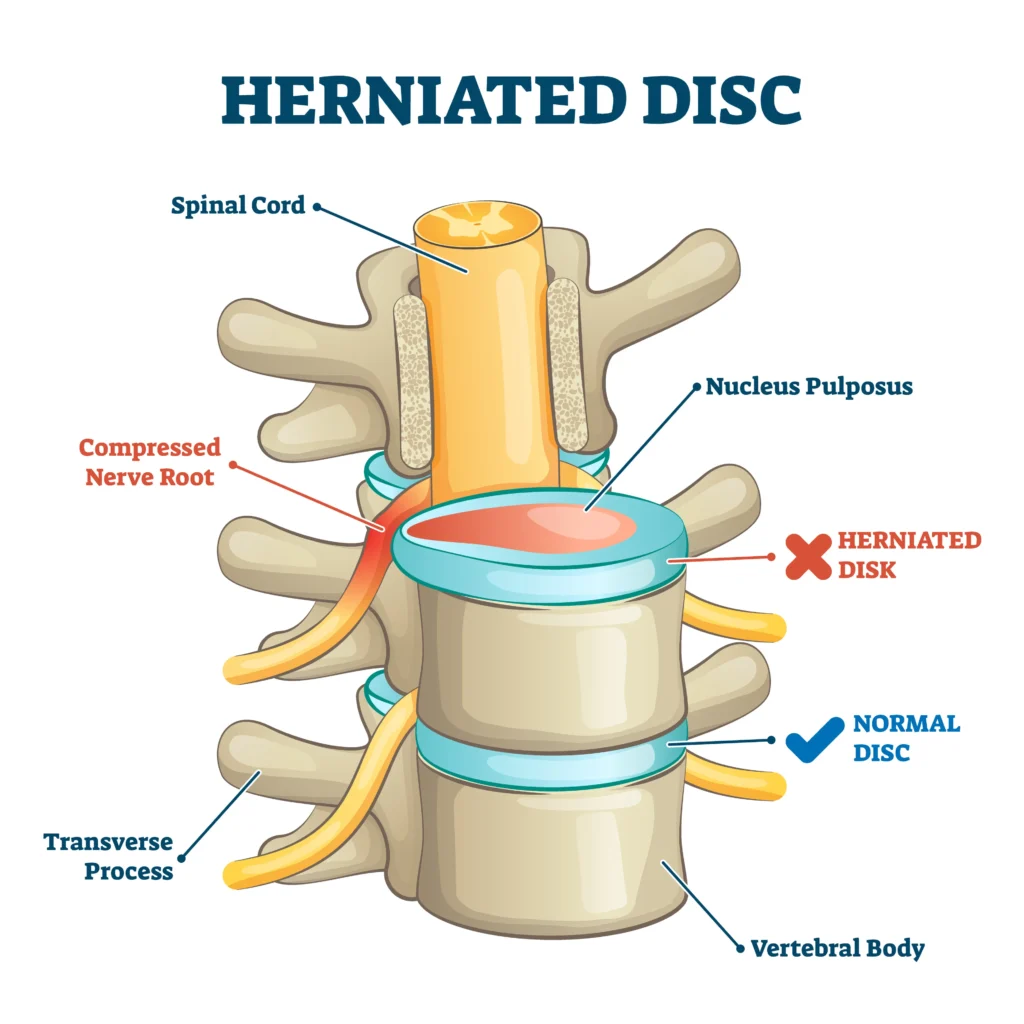
For most people, as it was for Frank, the answer is a herniated disc. Your spinal vertebrae are cushioned and protected by flexible cartilage discs (spinal discs). If one of these discs bulges or ruptures so that it irritates or pinches the sciatic nerve, you’ll experience sciatica pain.
Other medical issues (such as a bone spur, inflammation related to pregnancy, or a tumor) can also cause sciatica, but these conditions are much more rare. If you have sciatica, the chances are good you have a herniated disc — and that’s something physical therapy can help resolve!
How Physical Therapy Can Help With Sciatic Pain
When treating a herniated disc (and, by extension, sciatica), our therapists will move through the following steps:
- Manage Pain: We’ll develop a plan to address your acute pain, pulling from several options. Gentle spinal mobilizations, soft tissue manipulation of your back muscles, and pain relieving modalities such as TENS or hot and cold therapy can all help.
- Improve Mobility: Movement is crucial in addressing sciatica. Spinal mobilizations play an essential role here, allowing you to move the joint without exerting effort. We’ll also incorporate active stretches and mobility work to help ease range of motion restrictions and prepare your body for the next phase of treatment.
- Strengthen Your Back and Core: As your pain lessens, we’ll begin working to build strength in your core muscles, which stabilize and support your spine. By strengthening these muscles, you can alleviate the pressure on your lumbar spine that contributes to sciatic pain and a herniated disc.
- Educate to Prevent Future Pain: Finally, we can provide the tools to prevent a future bout of sciatica. We might help you develop a home exercise program to keep your spine healthy or show you how to properly lift heavy objects to avoid injury.
Sources: https://www.ncbi.nlm.nih.gov/books/NBK507908, https://www.choosept.com/guide/physical-therapy-guide-herniated-disk, https://www.physio-pedia.com/Sciatica
Strengthening Our Hometown
Become strong by attending one of our hometown workshops. Come out and attend our workshops! All are welcome, although spots are limited, so sign up today!
December Workshop will be an appointment request workshop that will end on December 17th at 6:00PM
Exercise of the Month
Seated Sciatic Nerve Tensioner
3 Sets, 10 Reps, 0 Hold
Sit in a chair with one foot flat on the ground and the foot on the side you want to work flexed with your toes pointing towards your face. Lift one lower leg by lightly contracting the upper thigh while simultaneously lowering your head, slowly tucking your chin towards your chest and exhaling. Slowly return to start.


Find Sciatica Relief at GTS Physical Therapy
Sciatic pain can be incredibly intense and often debilitating. Regular physical therapy will help you resolve that pain — and the underlying cause — so you can get back to living a full, healthy life.
To get started with your own personalized sciatica treatment plan, call to schedule an appointment today!